Your knowledge, read only by who you choose.
Upload price lists, policies and notes, and scope each to the company, a department or one employee. Work built on them says where every fact came from.
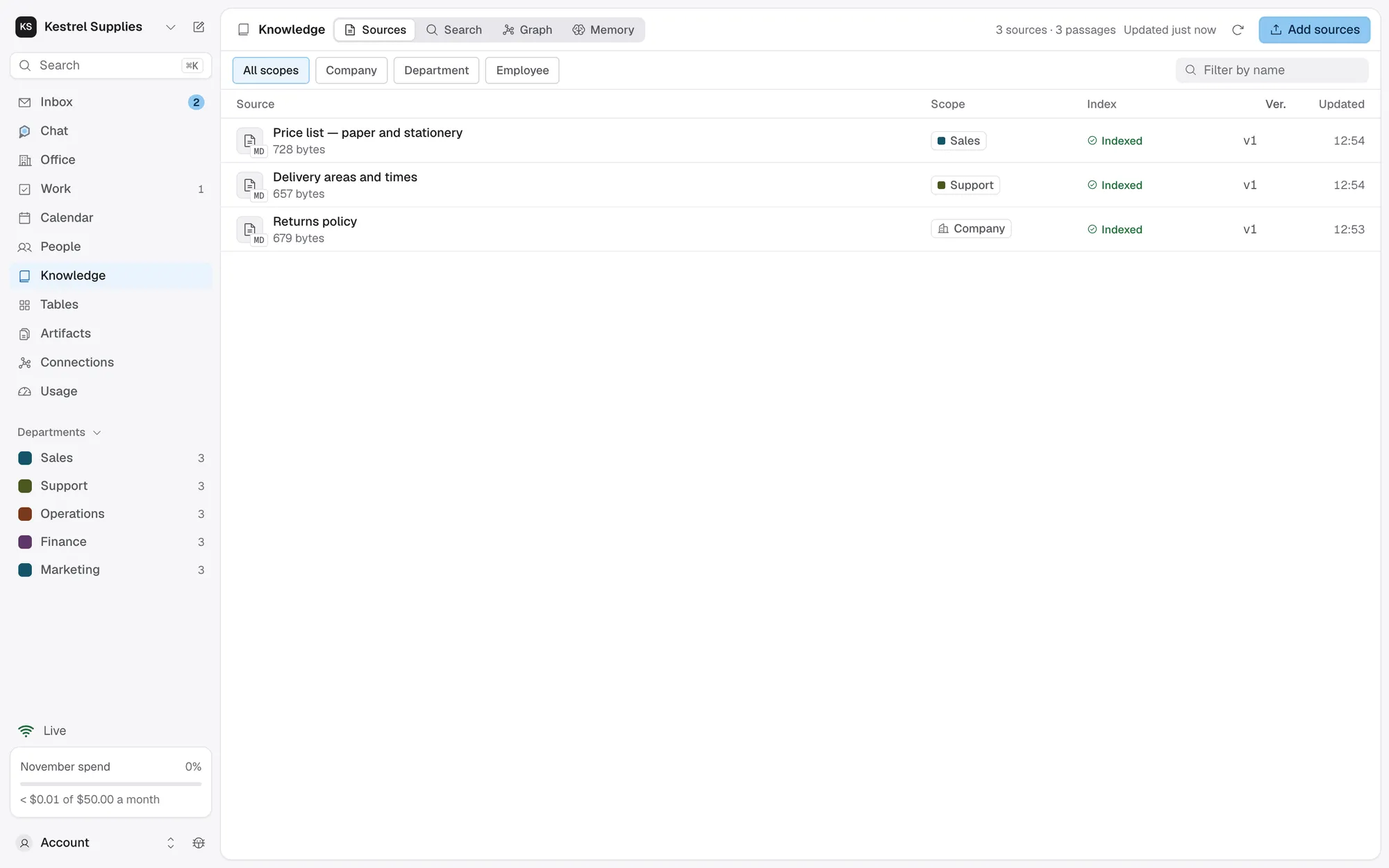
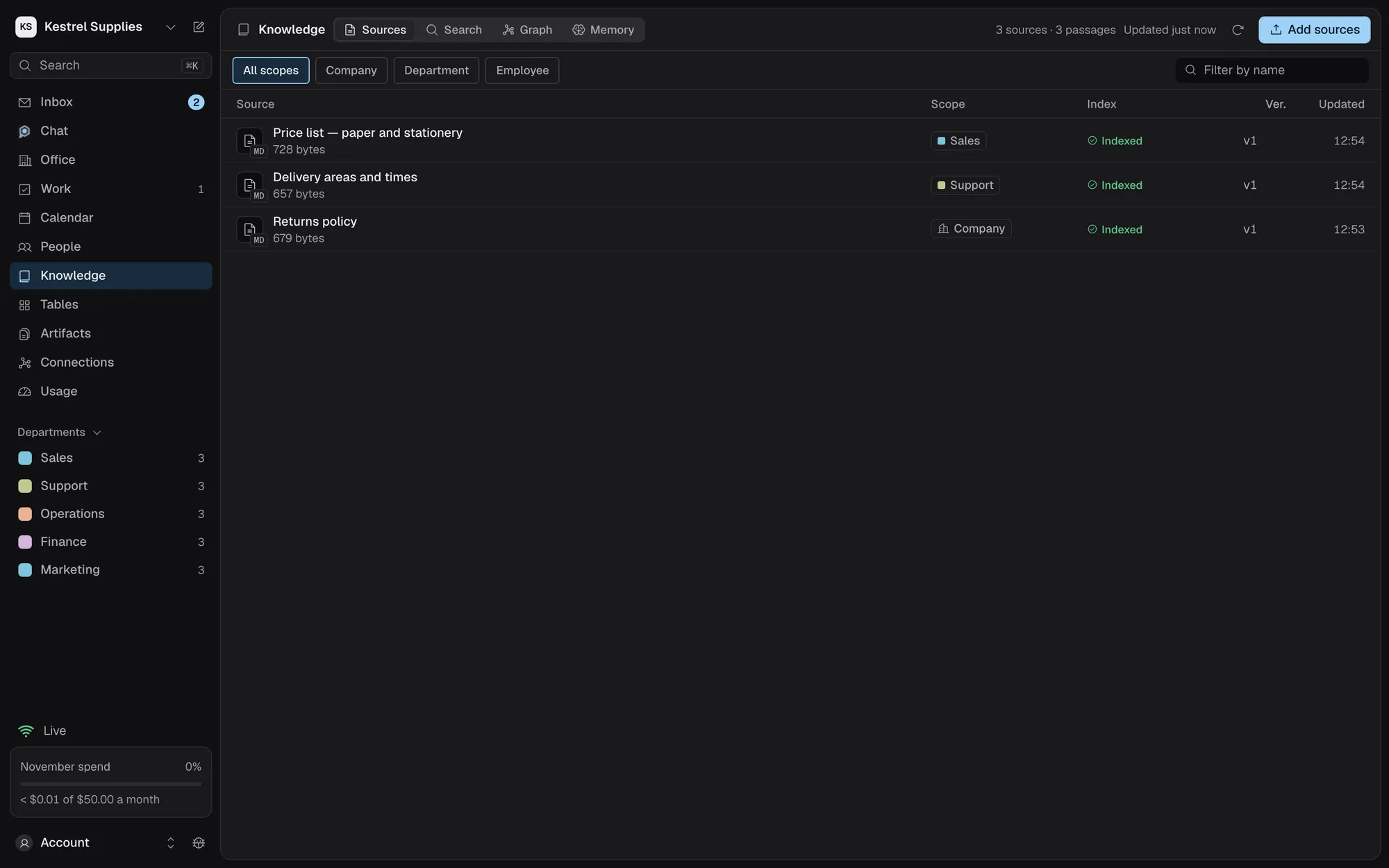
Documents your employees search and cite
Drop a file or paste text. Royak indexes it, and keeps going after you close the page.
- Notes, PDFs, Word files and images
- Every new version kept
- Indexing and search at no cost to you
Each source has a scope: the company, a department or one employee.
- Titles, managers and skills give no extra access
- Chat reads everything you can
- Change scope, revoke or delete at any time
A deliverable cites what it used with chips such as [S1], and ends with a Sources list.
- Only passages that match well, at most five a search
- Access is checked again before a source is cited
- Open the source at the passage
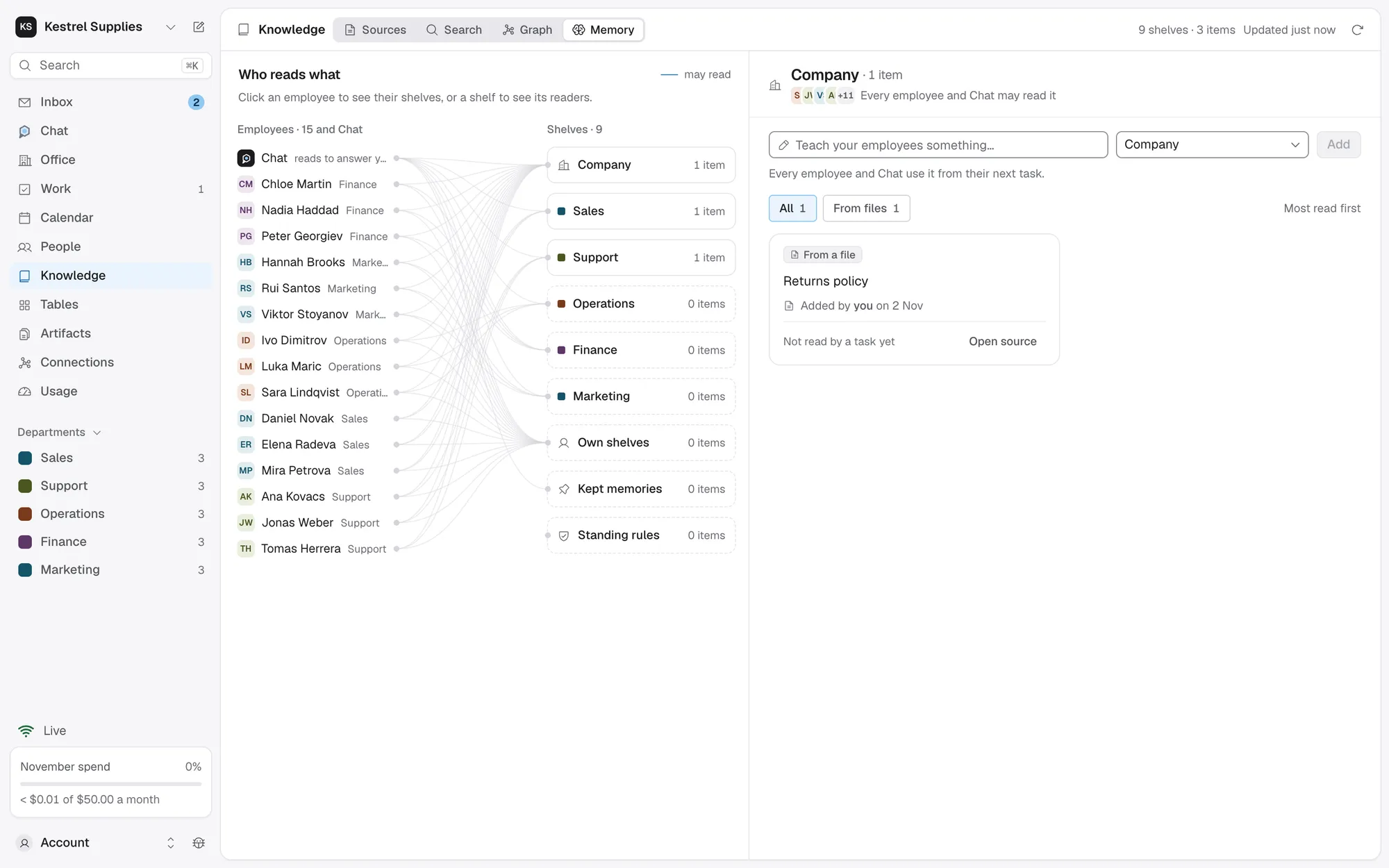
See exactly who reads what
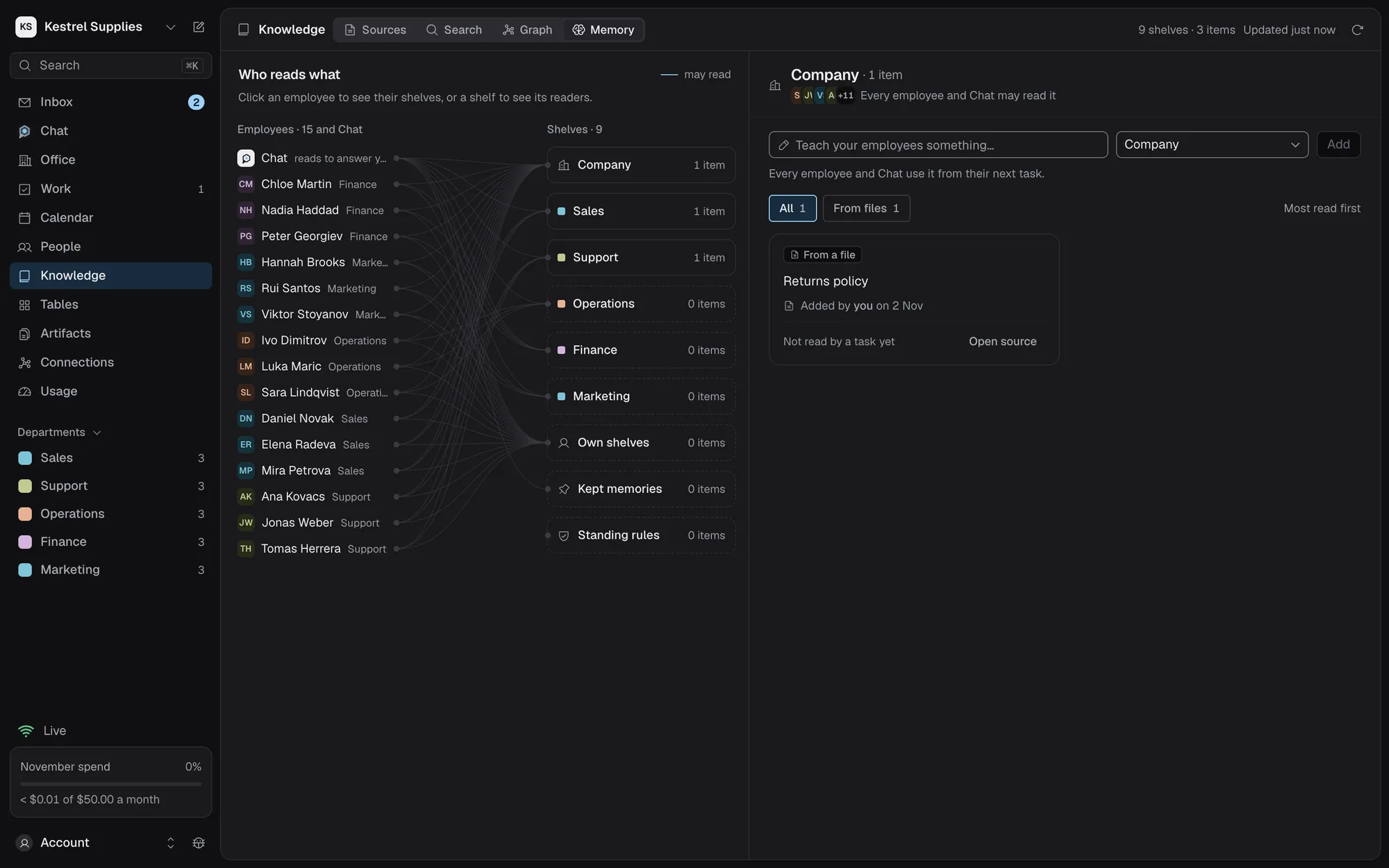
Knowledge › Memory draws Chat and each employee beside the shelves they read: the company’s, each department’s, their own, Chat’s kept memories and standing rules. A line means that reader may read that shelf, by the same rule a task uses.
- Teach a fact in one line, such as “We always quote prices in euros”
- Each card says who read it and in how many tasks
- Forget removes a note from the next task on
- Kept memories are for Chat only; employees never read them
Every answer says where it came from
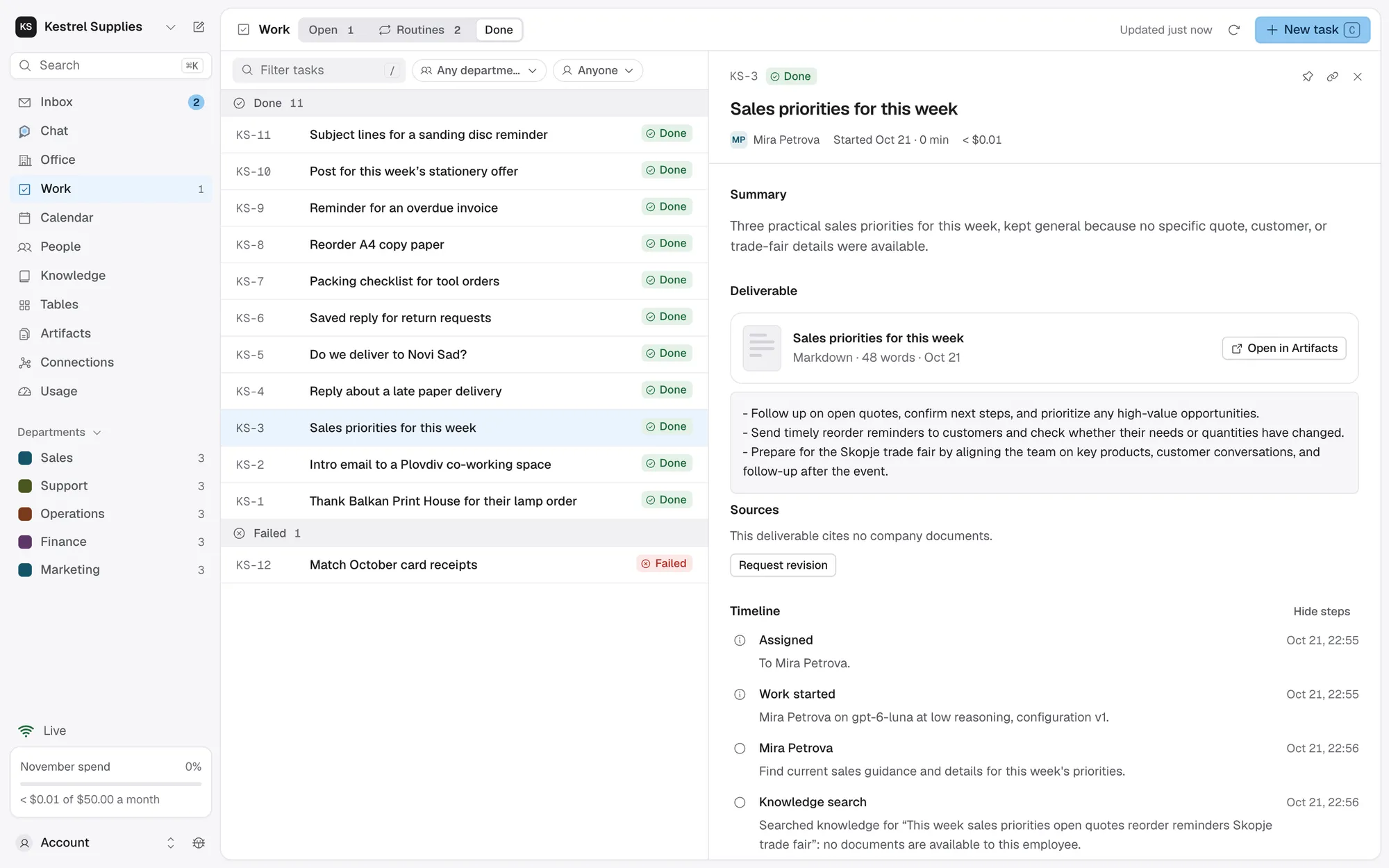
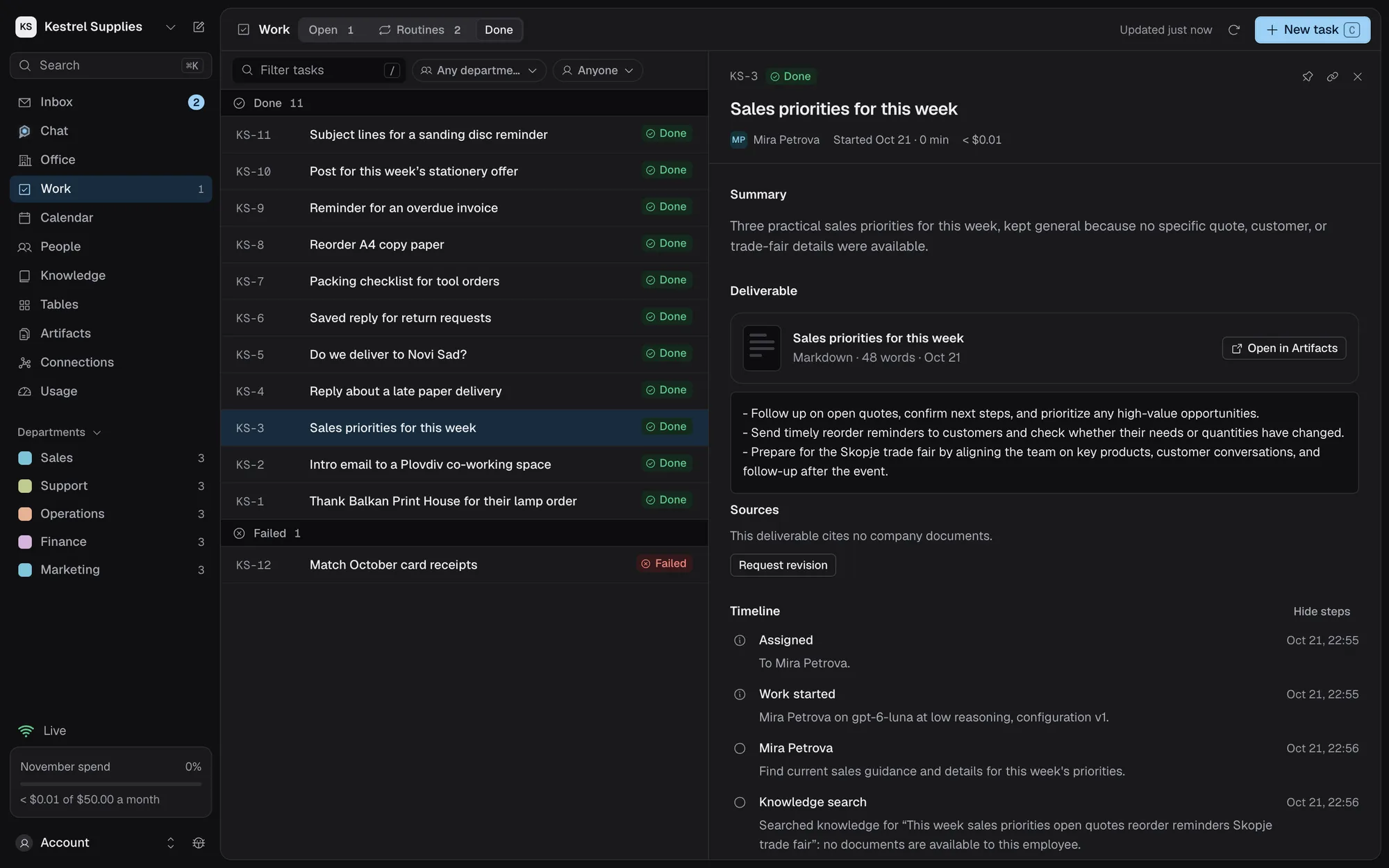
While working, an employee searches the sources in its scope, and the task’s timeline shows what it searched for and the passages it found. The deliverable lists its sources, each opening in Knowledge.
- The Search tab finds the passages your employees would cite
- The Graph shows which tasks read a source and what was built on it
- A warning when a deliverable rests on an older version
- Text written outside the company is marked, and sends from it wait for you
Questions about knowledge and memory
Can an employee read a source outside its scope?
No. Search only returns passages the employee may read, and Royak checks again before adding a source to a deliverable.
Do employees learn from past tasks?
Not by themselves. They read their sources, what you teach, and the standing rules you approved, so their work stays predictable.
Should I teach a note or upload a source?
Teach a note for a short fact or habit, such as “We never discount below 10%”. Upload a source for a document: a price list, a contract, a handbook.
How do I make an employee always do something?
Use a standing rule. It adds a line to that employee’s instructions once you approve its exact wording.
Can someone outside the company open my sources?
No. There are no public or shareable links: every preview and download checks that the person is a member of the company first.
Teach your company what it knows.
Free plan, no card. Your documents, read only by the people you choose.